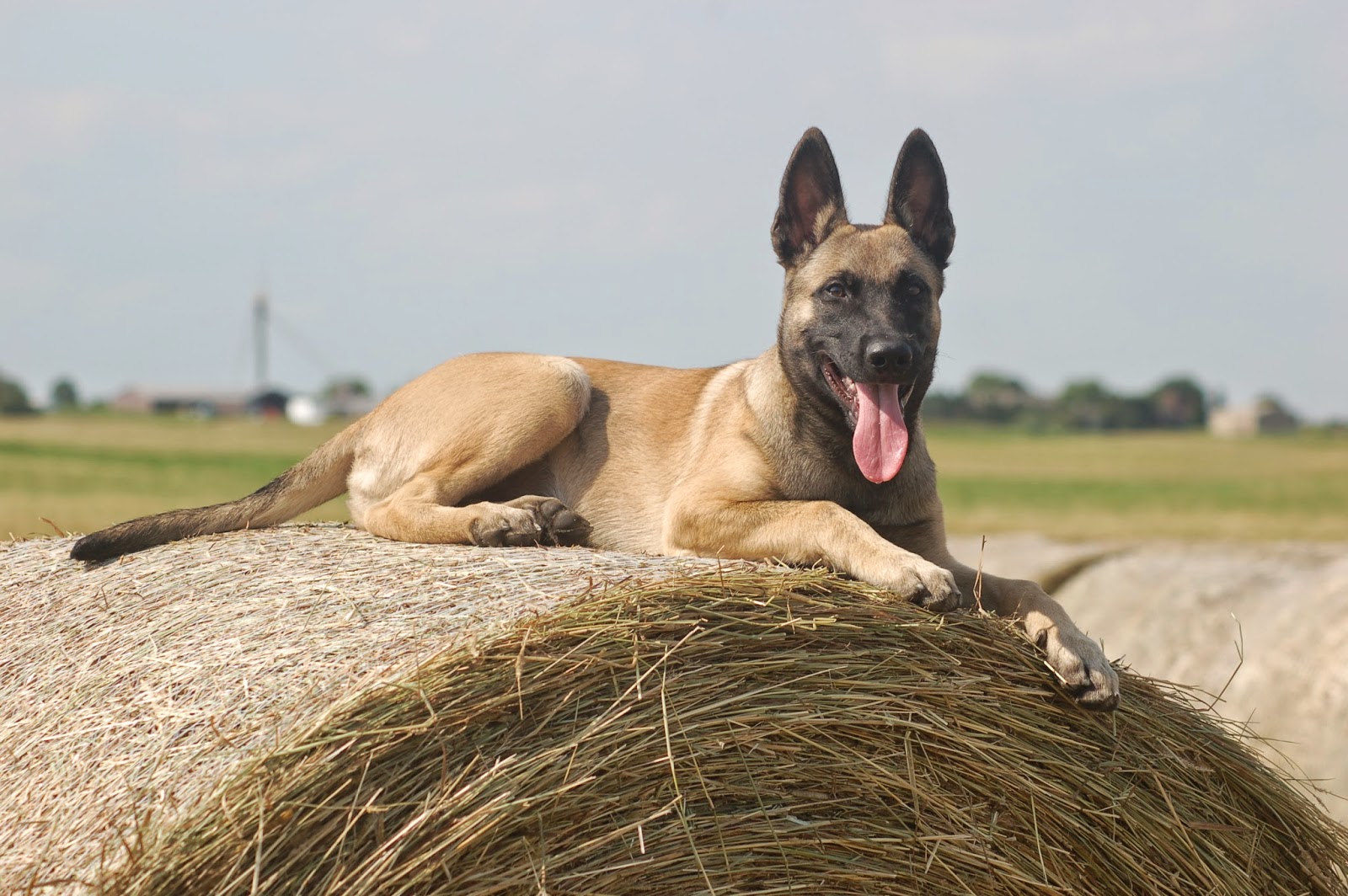
Showing posts with label Belgian Malinois Puppy. Show all posts

Tuesday, November 4, 2014

Belgian Malinois Puppies at 5 weeks

I am as proud of our new litter of Belgian Malinois puppies as if I had fathered them myself.
Our most recent litter was the result of breeding two extraordinary  Belgian Malinois, Tina and Max . The offspring turned out to be everything we expected and more.
We start our pups in

training at 5 weeks of age. It is at this point that they are introduced to wearing a collar and lead. To make sure they are well socialized, we take them everywhere- crowded streets, to the store, parks- so they are exposed to as many people and different surfaces as possible. The pups are also exposed to children and other animals. This sets a great foundation for the future since we have zero tolerance for child or animal aggression.

CCPROTECTIONDOGS.COM
Today ushered in their first experience on the agility course! Their performance could not have been better. They enjoyed it and we enjoyed it knowing that, just like their parents, these pups will be well on their way to make good Personal Protection Dogs. 


Contact us at http://ccprotectiondogs.com/ if you have any question or are interested in obtaining a Belgian Malinois Puppy.

Saturday, August 9, 2014

Your New Belgian Malinois Puppy


CCPROTECTIONDOGS.COM
Canines are, by nature, very social animals. They often enjoy the company of other dogs, and are able to establish a social structure between themselves without human interference. However, your resident canine may not be used to having other dogs as house-mates. If this is the case, introducing a new puppy into the home may be problematic.

Preparation is the most important step in introducing a new puppy into the home. The first impressions between your new pup, and your resident dog can mean the difference between a smooth transition or the start of a long series of headaches. Resident dogs being over-protective of the home or their belongings can be one of the biggest problems in introducing any new dog into the home. In order to avoid this, it is a good idea to introduce the dog to your new puppy in a neutral environment, such as a park. Be careful not to use a park where you frequently take your dog for walks, as it may feel territorial over this area as well. Be sure to have a second handler with you, as holding both leashes yourself will make the dogs feel forced upon each other. Do not hold the puppy during the initial meeting, as this may make it feel trapped. Let the dogs approach each other at their own pace. It is also extremely important to purchase separate food bowls and arrange separate sleeping areas in advance. Forcing your dogs to share food bowls or beds is simply asking for disaster.

When it comes time to bring the new puppy into the home, make sure you've prepared the space where they will meet for the smoothest possible introduction. Clean up the area so that the dogs do not feel anxious by excess clutter in the home. The area where they meet inside the home should not contain any food bowls or toys that the resident dog may feel protective over. It is also best to avoid putting the two in small or confined areas where they may feel trapped. Providing that the initial meeting in the park has gone well, you may walk both dogs into the home as if it were a regular routine. Let your resident dog off its lead first, and let the puppy explore the area while still on lead.

If, at any time, you notice signs of aggression, you should separate your dog and the new puppy immediately. Do not, under any circumstances, let your dogs fight. Be aware that your resident dog may show behavior similar to that of dogs in a parental role, such as nipping at the puppy's neck. This is very different from aggressive behavior, and should be permitted.

Whether you have a new Belgian Malinois Puppy, Dutch Shepherd puppy, or German Shepherd puppy, taking the proper precautions and ensuring a smooth introduction will help your new puppy and your resident dog from a positive relationship that will last for years to come.


Wednesday, May 7, 2014

How To Treat Lic in Your Protection Dog

Despite the best efforts of a handler to keep his or her protection dog clean, infestations of fleas, ticks or lice are sometimes inevitable. Luckily, lice is fairly uncommon among dogs in North America. However, the possibility of infestation still exists, and it is important to know what to look for, and what steps to take in the event that your dog does get lice.

CCPROTECTIONDOGS.COM
While lice is commonly known as a human affliction, the type of lice that affect dogs is different, and cannot live off of humans. Just like fleas and ticks, dog lice can cause intense skin irritation and often carry serious diseases. However, unlike energetic fleas, dog lice move slowly and cannot jump or fly. While dog lice is different from the lice that affects humans, the symptoms and methods of treatment are largely the same. A dog with lice will scratch noticeably often, and will often be distracted by the irritation of its skin. Upon parting the dog's fur, you may find small white particles attached to the strands. These particles are eggs, and are the tell-tale sign of a lice infestation.

Luckily, lice in dogs is fairly easy to treat. An insecticide spray or bath is often enough to rid your Protection Dog or Guard Dog f the infestation, although your veterinarian may recommend that you dog have its fur shaved. If you have a German Shepherd puppy, or Belgian Malinois Puppy, you should consult your veterinarian for treatment advice before using insecticide sprays or baths. Finally, your dogs bedding and brushes should be replaced in order to prevent risk of reinfection.