Showing posts with label Dogs. Show all posts

Thursday, April 9, 2015

Using The Right Tools To Train Your Dog

It takes very special equipment to train our  dogs. Much like a carpenter must possess the proper tools to create great work, so must the dog trainer start with the best equipment available.

CCK9 is very specific about the collars and leads used in both the learning and finished stages of dog training. All of the tools that we utilize are hand made exclusively
for us by a master leather crafter and to our custom guidelines.

Our training method requires multiple types of collars and leads. One collar, however, that we never use is called an “e-collar” or shock collar. Not only are they a cruel method of training but also they are completely unnecessary to trainers who know how to properly train a dog. Often, videos online will show a trainer working with a dog. The level of obedience is impressive until you notice the small device that they are holding which looks like a cell phone. It’s actually a remote control for the shock collar. It is unfortunate evidence that the dog was not given the proper training foundation early on and now the trainer must rely on the e-collar to get results.

All of our finished dogs are off leash obedience trained; they respond to commands off leash just as well as if they are on a leash. As you can image, dogs must start their training on a leash before off leash obedience can be taught. Unique to CCK9 is the long 7-foot lead, with brass double snaps and a floating ring, used when we walk our dogs with structure. The leads commonly found in pet stores are only 4-6 feet long, too short to have the best control over a  dog. It seems counterintuitive but a handler has far greater control when they hold the leash in a loose, u-shape.  Dogs take their cues from the handler and when the handler is holding the leash too tight it indicates stress and tension. 

The dog will respond to this negative message by being overly defensive. Since all of our dogs are off leash obedient, there is no loss of control when using a longer lead. The dog will always heal on your left with or without a lead. Therefore, longer leads allow the handler to communicate easily with their dog.
Another piece of equipment especially useful when training dogs for the police or military is our 3-foot police lead with a handle. Police dogs require a tighter lead since the dogs are often put in tense, acute situations. The handle, held in the officer’s left hand, allows full use of their right hand to discharge a firearm.

One of the best pieces of equipment for at home use is the small pull tab (in the middle of the photo). The ultra-light pull tab acts like a small lead and allows the trainer to easily correct a dog since it is impractical to attach a full size lead to a dog while it is being trained in a home environment. All of our protection dogs are trained in home environments and therefore you can imagine how useful this bit of equipment is.

Lastly, our clients often remark on how great our 1 3/8 inch leather flat collar is. Sturdy, strong, and highly crafted, it makes a statement about your dogs.
All of the equipment is included when your dog is personally delivered to your home . We do sell these items to the general public.
The attention to detail, down to the collar we use, is what makes CCK9 a leader in dog training. 
To Read more go to www.cck9.ca

Saturday, January 17, 2015

Guard Dog Explaind

Not a day goes by that I don’t get a call or email asking what the difference is between a guard dog and protection dog. As I have mentioned in another article, a protection dog has all the attributes of a family pet. The difference is that now you have a well-mannered, off-leash obedience-trained dog that is social and that you can take anywhere, whether it be an airport or a shopping mall, and not have

Any issues. It will not hesitate to protect you and your family if the need arises.
A guard dog has little or no social skills, and merely guards a gated area, whether it is body-shop or a car dealership. It is important when purchasing a guard dog that you get it from a reputable breeder. A good guard dog still has to have strong nerves, and will not back down from an unwelcome guest.   It is also important to consider purchasing two guard dogs, for they will work together and feed off each others energy. If considering purchasing two dogs, I would recommend a male and female, for the females are a lot sharper and will indicate a lot sooner while the male has greater size for intimidation.

When housing your guard dog it is very important to make sure that no only is your fence secured to keep your dog from getting out, but that you keep your dog in a crate during the day. The crate should be in a quiet and cool place so that he or she can sleep during the day and work during the night. To read more visit, www.cck9.ca

Monday, December 22, 2014

Police Dog Injured in San Marinos

In the LA Times, a police dog was reported to have been stabbed in the line of duty:

San Marino, CA – A police dog was injured during an incident involving an intense standoff following police response to a burglary alarm.
When police arrived at the scene, they encountered David Pohuns
Liu, 45, standing at the doorway with a large knife and a gun. Liu demanded that police shoot him, but then fled the home whilst refusing to leave.

The standoff lasted approximately 5 hours as police negotiators tried to reason with Liu. Rik, a Belgian Malinois police dog, was sent into the home in an attempt to coax Liu from the building, but was slashed across the head and muzzle. Officers were able to call the injured dog back from the home and have it rushed to emergency surgery.

Shortly after, Liu set fire to the home but finally surrendered after police began using pepper spray projectiles as a last-resort non-lethal tactic. Liu is currently hospitalized for treatment of burns and smoke inhalation during a fire. Thankfully, K9 Officer Rik suffered and no permanent injuries and is expected to make a full recovery.

 Just one of many examples proving the true danger of canine protection work. Unfortunately, sporting dogs sold as true protection dogs increase the risk of injury ten-fold. Failure to target the weapon arm and disarm the opponent is one of the biggest mistakes sporting dogs make, and it can easily mean the difference between life or death.  We at Command Control Protection Dogs train all of our protection dogs to do real protection work in real-life scenarios involving real danger. Our dogs are very social and love children, but will protect you and your family 100% in an emergency situation. For more information visit, www.cck9.ca

Wednesday, December 10, 2014

Artificial Insemination


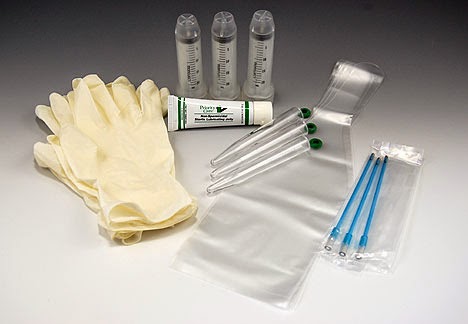
Artificial insemination is performed frequently with livestock, often because cattle are too large to mate naturally without risk of injury. However, it is usually left as a last resort among canines. The process involves three main steps: collection and preservation of semen, preparation of the female, and the actual act of insemination.

For collection, a female in heat is often used as a “teaser”, but once the female is mounted, care must be taken to ensure that the intended sire is, for lack of a better term, redirected into the appropriate collection device. Once the semen has been collected, it may be used immediately, chilled for up to 24 hours, or frozen for prolonged storage. It should be noted, however, that while chilling and freezing will help to preserve the semen, the chances of successful fertilization will still degrade over time.
For fertilization to occur, the female must be inseminated at the right time. Typically, attempts at insemination are performed approximately four days before ovulation, and continued every second day until two days after ovulation. Of course, determining the exact date of ovulation can be difficult. Blood tests can determine the date of ovulation by measuring the level of progesterone in the female. However, this method is often expensive and impractical. A far less accurate, but much more cost-effective method is to simply keep track of the female’s cycles to predict when she will next be in heat.

Finally the act of insemination is performed using a specially designed pipette. The male should not be present during this process. The female is held in an upright position, and the semen is deposited at the cervix.

Whether you are breeding German Shepherd puppies, Belgian Malinois puppies or Dutch Shepherd puppies, you should remember that artificial insemination should only be used as a last resort. The natural mating process offers much greater rates of success, and is always the preferred option of artificial insemination. For more information regarding this article  go to www.cck9.ca

Wednesday, November 12, 2014

St George's University and CC Protection Dogs

St. Georges University, on the island of Grenada, is dedicated to providing top- notch security for the benefit of its students, employees and surrounding community. Rapid expansion of the campus combined with worldwide increases in crime and US Department of Education requirements spurred administrators to think outside of the box. After considering many options they opted to assemble a team consisting of eight highly trained and dedicated patrol officers combined with eight custom trained guard dogs. This decision turned out to be a complete success.

The staff in charge of implementing the program focused on five companies before deciding on Command Control Protection Dogs  as the ideal provider of the eight dogs needed. Administrators had extremely specific requests and felt that CCPD was best equipped to handle their requirements. All of the selected guard dogs had to be highly sociable and not pose a physical threat; all of them must serve to complement their handler. CCPD was very happy to customize the canines to these exact specifications and supplied eight guard dogs that had been trained specifically in perimeter patrol. The K9 officers are now completely in control of any situation with the benefit of having a canine that is alert to any suspicious activity, will growl on command and serves as a visual deterrent. Perry Ahlgrimm, CEO of Command Control Protection Dogs       personally structured the intense two week training course as well as yearly maintenance courses. He continues to have an ongoing dialogue with St. Georges University.

Administrators at the university are pleased that CCPD was able to provide dogs that met their very stringent criteria. If it weren’t for the versatile training methods employed by CCPD the K9 unit would not be as successful as it is. They also appreciated Mr. Ahlgrimm’s professionalism, objective attitude and trustworthiness in addition to his superior training skills. In fact, Mr. Ahlgrimm was also consulted in screening potential K9 Unit security guards for the University.
CCPD is proud to have provided a security solution to St. Georges University. They are dedicated to providing dogs custom tailored to a client’s situation and needs. Diligence, superior dogs, flexible training, attentive staff and a can-do attitude is what makes them a leader in the industry. 

Command Control Protection Dogs provides some of the best trained dogs in the industry. All dogs sold at CC Protection Dogs are fully guaranteed.


Please visit our website at www.ccprotectiondogs.com or email us at: info@ccprotectiondogs.com.or call us at: 909 833 4674 or call toll free at 877 687 2259

Wednesday, October 29, 2014

Training Your Dog For Food Refusal

There are lot of ways which one can train their  dog for food refusal. One of the many training methods for food refusal that we use at CCk9 is, first to make sure that every time you feed your dog whether it’s dog food, or a bone, it is always presented in a bowl. Second, always make sure that your scent is the only scent that is on the bowl and food. It is important that you


always clean your hands with hot water and soap before massaging the food. To prove the food refusal we also use a special substance that we pour on the food. This helps as a deterrent for our protection dogs to not take the food. All of our dogs are all trained for food refusal.

When using these methods to train for food refusal it is a lot easier to start when still a puppy. With that in mind, if we have a litter of German Shepherd puppies, Belgian Malinois puppies, we know that one or two out of a litter have the genetics to be trained up to a top level, we will start them early. This makes it 100% Guarantee for food refusal.

The method that we use is very effective unlike what you will see in the sporting world where the dog is in a down stay on a groomed field and the decoy presents the food. This may look impressive, but this is not real food refusal. To train your protection dog for food refusal is not easy, it requires communication, patience, consistency, discipline. 

If you would like to learn more on how to get your dog trained for food refusal, check out our website, www.cck9.ca

Wednesday, October 1, 2014

Working With Great People


I have been working here at CCK9 for quite some time now and honestly I could not be happier. There are so many aspects about this job that are incredibly rewarding, and I find myself discovering a new one each day. Moving from Florida, I left my family and friends, an entire life that I was comfortable with. Much to my surprise though, a change is just what I needed. Working with this company has given me a new environment, new people, and new experiences that have taught so much about myself. All of us are working towards a common goal here at CCK9, to provide other with trained protection  dogs that will not only give them piece of mind but also a friend.

Earlier this week I experienced one of my first goodbyes that actually took a toll on me. After being here for a few months now, I have become incredibly close with a lot of the dogs. Spending every day in the kennels, caring for all of them, it’s hard not to build a bond. Sadie, one of the most amazing animals I have ever met has gone off to her new family. She was one of the first of the Dog that I started to interact with when I first started working here. Before CCK9 I had never worked directly with protection dogs, so I was unsure of what to expect from them. However, Sadie quickly calmed all of my nerves and her sweet, loving temperament made me realize right away that I had nothing to worry about. After just a few hours of spending time with her, I quickly realized how special she is.

Saying goodbye to her at the kennels earlier this week was a little hard for all of us. I hope more than anything that Sadie’s new family realizes how lucky they are to have one of then best protection dogs in this world. Not only is she a beautiful German Shepherd from a strong bloodline, but she has unbelievable protective instincts. During socializing sessions, I instantly saw the bond she forms with children, it’s unlike anything I’ve ever seen. Sadie always lights up whenever children are around, so I am confident that the children in her new family are about to gain an irreplaceable best friend. Knowing that CCK9 can help to bring the very best out in these animals and train exceptional Dog makes every moment of my job worthwhile. To see more visit www.cck9.ca

Saturday, August 30, 2014

Female Dogs Coming into Season

CCPROTECTIONDOGS.COM
The decision to have a female dog spayed is one that is often made under the assumption that caring for a dog in heat is too much work. For those who've decided to keep their female German Shepherd intact, knowledge and preparation are all it takes to keep things under control without it being hassle, and for those who've decided to take on the task of breeding, knowing your dog's cycle becomes key to success.

The first step is being able to predict when your dog is going to be in season. Unlike some animals who enter mating season at specific times of the year, female dogs can be in heat at any time during the year. However, this does not mean that your dog is ready to mate for the entire year. In dogs, mating follows a regular cycle. It varies between breeds, and between individual dogs, but the majority of female German Shepherds will be in season approximately once every six months. Take note of the end of your dog's last cycle, and you can predict that it will happen again another six months from that time.

You will know that your dog is in season because she will begin menstruating. Bleeding typically lasts about a week, and is followed by about three weeks during which your dog is fertile. Unless you plan on breeding, it is very important that you keep your dog separated from male dogs during this time. Nearing the end of this time, your dog may require more attention and petting than usual.


Whether you're planning for German Shepherd Puppies, or have kept your female German Shepherd intact for other reasons, knowing your dog's cycle and knowing what to do when your dog is in season are extremely important.

Wednesday, August 27, 2014

Frozen Semen

CCPROTECTIONDOGS.COM
Bloodlines are very important when breeding dogs; they've been refined and specialized over hundreds of years to create the best breeds for a wide variety of purposes. Even today, canine bloodlines are still being refined through selective breeding of only the best dogs. It stands to reason then, that when a breeder happens across a dog that performs exceptionally well, they will want that dog to sire or dam as many litters or possible. Of course, a dog can only be bred so many times in a lifetime, but there are methods that allow one to store a dog's genetic material for future generations.

For male dogs, semen can be collected and stored for long periods of time through freezing. When first collected, semen will only stay effective in storage for between 3-5 hours. It is important to remember that sperm are essentially alive, and tend to have very short life-spans. However, immediately chilling the semen allows it to remain in storage for a much longer time; when chilled, it can often last as long as 2 days. When properly frozen, the storage-time increases exponentially. Essentially, frozen sperm can last indefinitely, but its quality and effectiveness may still degrade very slowly over time. It is important to note that properly storing frozen semen at the appropriate temperature is a difficult task. It requires temperatures lower than -300°F, and should only be attempted by a professional with proper safety equipment.

Unfortunately, the amount of time a sperm cell spends in storage is inversely proportional to the amount of time it will survive once warmed to body temperature and introduced to the uterus. Fresh semen will typically survive in an intrauterine environment for as many as 5 days, while chilled semen may only survive between 2-3 days. Frozen semen has the shortest intrauterine life-span, and may only last about a day. The chances of pregnancy occurring are directly related to the amount of time that sperm are able to survive within the uterus. This means that fresh semen has the highest chance of successfully leading to pregnancy, while frozen semen has the lowest.


Whether you're breeding German Shepherd Puppies, Belgian Malinois puppies, or Dutch Shepherd puppies, you should keep in mind that fresh semen and natural conception are always the preferred methods. Due to the costs of having semen stored at the appropriate temperature, as well as reduced effectiveness after being frozen, freezing and storing semen should only be done when absolutely necessary.

Saturday, August 23, 2014

Taking Home Your New Puppy

So you have finally made the decision to bring home a new addition to your family? Before bringing home your first German Shepherd puppy there are many things that you need to think about and plan for. Getting a dog can be such a rewarding experience but it is important to realize that it also comes with years of responsibility. Make sure that you are ready for years of daily care, exercise, vet visits and the ability to give unconditional love to this animal.

CCPROTECTIONDOGS.COM
Bringing home a new puppy can be both an exciting and new situation, remember that a lot is going to change. It is important to make sure that everyone in your family is completely comfortable with the idea of bringing in a new puppy to your home. Create rules for yourself and your family on how to care for your German Shepherd puppy. Also you will need to prepare your house and yard so that they are set up as a safe environment. Gradually begin purchasing supplies that you will need for your puppy, such as food, and a crate prior to the day you plan on bringing it home.

Be sure to find a crate that is suitable for your puppy's growth as it will spend a lot of time in the crate during the crate training process. It is always good to have everything set up before the arrival of your puppy, to ensure that it has what it needs. Please remember that this puppy will be leaving its mother and everyday environment and entering into a strange one, which could make it very stressful for them. The more prepared you are and the more structured of a transition you create, will make it that much easier for your German Shepherd Puppy to adapt to its new home.


Wednesday, August 20, 2014

Skin Problem With Your Dog

CCPROTECTIONDOGS.COM
Most of the time when a owner sees their dog itching or scratching themselves, they they do not think anything of it. However, excessive itching, scratching, or even chewing at the skin could be a response to a skin problem your protection dog has. To know how good of health your dog is in, it is helpful to look at there skin. This is because a dog's skin is one of the many indications of your dogs health. All dog breeds and ages can be susceptible to skin problems; however, dogs young, elderly and dogs living in unhealthy environments may be more at risk. There are many different types of problems that your protection dog could get such as, hot spots, dry and flaky skin, acral lick granuloma, color or texture changes, shedding an hair loss, impetigo, allergic dermatitis, and yeast infections. These can occur due to a range of different causes, and it is important to find out what has. If you cannot, of course contact your veterinarian. One cause of many skin problems is seasonal allergies, the scratching could be a result common allergens like pollen, weeds, and dust. Some dogs may also develop food allergies to some ingredients found in dog food or fillers and colorings. Grooming products as well have been known to irritate dog's skin, it is important to make sure that your are using products made specifically for dogs. Metabolic or hormones can cause a change in the skin color, consistency, and thickness. Overall there are many causes of skin problems and it is best to investigate on them before it worsens.


Skin problems are a serious matter and can affect your dogs health very much if not cared for properly. Symptoms of skin problems are usually easy to identify, if you pay attention to your protection dog's behavior. Scratching, licking, chewing, scabs, redness, scaly patches on face and paws, rashes, swellings and rubbing their face on furniture or carpet are all symptoms of a dog with skin problems. It is not always the most simple thing to realize that your protection dog could have have a skin problem. This means it is important to contact your vet as soon as you see any abnormalities on the skin or witness excessive scratching, licking or biting. The vet will usually diagnose your animal by a skin biopsy, testing for ringworm, microscopic exam of the skin and hair, allergy testing, and blood tests. If your protection dog is diagnosed with a skin problem the ways it will be treated are by shampoos and ointments to treat parasites, a balance diet, dietary supplements, antibiotics, or injections to decrease the dog's reactions to allergens. Please note that there are ways to prevent your Protection Dogs from ever getting a skin problem, like using hypoallergenic shampoos, brushing your dog regularly, giving them a healthy diet, cleaning your home regularly and mostly providing them with a calm living environment.


Sunday, August 17, 2014

Rules For Schutzhund

CCPROTECTIONDOGS.COM
With the membership "For the German Shepherd Dog" the United Schutzhund Clubs of America is an organization that is dedicated to protecting and preserving the German Shepherd's working heritage through Schutzhund training. Schutzhund, which is translated as "Protection Dogs" originated in Germany so that breeder could evaluate and pick the highest quality dog for their breeding programs. In Germany still to this day a German Shepherd dog can not be bred without a Schutzhund title. The three titles are Sch H I (novice), Sch H II (intermediate), and Sch H III (master level). Schutzhund still continues to function as a breed test but it has grown into an extremely popular sport, especially in North America. The purpose of Schutzhund is to demonstrate the dog's intelligence, utility, endurance, ability to scent, courage, trainability and many others as well. The three parts of Schutzhund are obedience, tracking and protection, the whole sport has many rules and regulations that must be followed.

The following are just some rules and regulations of the Schutzhund sport. To begin with, the minimum age requirements for entry into the different degree levels are as follows, SchH A -18 month, SchH 1 -18 months, Sch1-1 11 -19 months, Schl-l 111 - 20 months, FH -16 months, and B -12 months. When only one judge is present a maximum of 10 (12 in the USA) dogs may be entered in the trial. If the amount of entries exceeds this, then the trial must be extended another day or more judges must be brought in. Only dogs that are in good health can be in a trial, also the dog must pass a test of impartiality and sureness. Another rule is that a dogs are only allowed to be in one Schutzhund degree for each trial. Also if a dog has been awarded a degree, a four week (two weeks in USA) waiting period must occur before the dog can be put into the next higher degree. When it comes to the event the participant must follow the instructions of the judge as well as the trial committees', without any disagreement. Also the handler must show the dog in a sporty and faultless manner, poor sportsmanship will lead to expulsion from the trial. Regarding score and ratings, the highest maximum score in each phase is 100 points, therefore the highest score for all three phases is 300 points. Again, these are just a few of the Schutzhund rules and regulations.


Friday, August 15, 2014

French Ring Long Jump Exercise

CCPROTECTIONDOGS.COM
French Ring is one of several European ring sports, with the others being Belgian Ring Sport and Mondio Ring Sport. There are small differences between each, but these differences are far outweighed by the many similarities. French Ring sport, in particular, was developed in France after the popularity of sporting dogs took off in the neighbouring country of Belgium during the early 1900's.

Like other dog sports, French Ring awards titles to dogs who perform well in exercises. These exercises are divided into three categories: obedience, agility and protection. Between dog sports, many of the basic obedience and agility tests remain the same, although each incorporates its own methods and rules for how each exercise should be performed.

Jumping exercises are one example of how the same basic concept can be performed quite differently from one sport to another. In French Ring, the agility exercises take on an element of classic track and field. For the long jump exercise, a metal "key" is placed on the ground, which the dog is expected to jump over. This key consists of hurdle-like bars that are knocked out of place should the dog fail to jump the entire distance (a minimum of 3 meters), thus allowing judges to measure the length of the jump. While it is commendable to test the distance-jumping ability of a dog, there is a big difference between jumping over a metal platform in sport, and jumping over a gap or ditch in the real world. On the other hand, KNPV makes more of an attempt to mimic real world scenarios through their hedge jump and ditch jump exercises.


Of course, you should always remember that any dog sport will never be nothing more than sport. Training German Shepherds and Belgian Malinois for real protection work requires real Protection Dogs training.

Tuesday, August 12, 2014

Labrador As Search And Rescue Dog

The Labrador Retriever is a loyal, intelligent breed with a reputation for bravery and initiative. Whether they are putting their friendly and social nature to work as therapy dogs, using their intelligence to help the visually impaired navigate busy streets as a guide dog or putting their nose to work for the police as a cadaver dog, the Labrador can be found helping people all over the world. Arguably one of the bravest and most noble jobs this breed has been known to perform is the work of a search and rescue dog.

The work of a search and rescue dog, also known as a disaster dog, is a long, exhausting and often very dangerous process. It requires intense concentration and a keen sense of smell. Earthquakes, avalanches, land-slides, terrorist attacks and any other number of disasters can leave people trapped and injured. It is the search and rescue dog's responsibility to navigate the dangers of a disaster site, locate survivors, and aid disaster-relief workers in bringing people to safety. Thick smoke, dust, burning debris, broken glass and ruptured gas lines make the work of a disaster dog extremely dangerous. These dogs put themselves in incredible danger in order to save the lives of others.

The calm and gentle nature of the Labrador Retriever makes it especially well suited to this kind of work. As a retriever, they naturally enjoy holding objects in their mouths. It is said that a Labrador can hold an egg in its mouth without breaking it. While a soft and tender bite may make the Labrador unsuitable for work as a police Protection Dogs, it is ideal for helping pull a person to safety from an icy river as a search and rescue dog. Alongside the Labrador Retriever, Golden Retrievers, German Shepherd and Belgian Malinois are breeds that also make excellent search and rescue dogs. Large-scale rescue efforts often include a mix of these breeds. However, as a cultural icon, the Labrador Retriever remains a symbol of humanitarian effort on behalf of all canines.


Saturday, August 9, 2014

Your New Belgian Malinois Puppy


CCPROTECTIONDOGS.COM
Canines are, by nature, very social animals. They often enjoy the company of other dogs, and are able to establish a social structure between themselves without human interference. However, your resident canine may not be used to having other dogs as house-mates. If this is the case, introducing a new puppy into the home may be problematic.

Preparation is the most important step in introducing a new puppy into the home. The first impressions between your new pup, and your resident dog can mean the difference between a smooth transition or the start of a long series of headaches. Resident dogs being over-protective of the home or their belongings can be one of the biggest problems in introducing any new dog into the home. In order to avoid this, it is a good idea to introduce the dog to your new puppy in a neutral environment, such as a park. Be careful not to use a park where you frequently take your dog for walks, as it may feel territorial over this area as well. Be sure to have a second handler with you, as holding both leashes yourself will make the dogs feel forced upon each other. Do not hold the puppy during the initial meeting, as this may make it feel trapped. Let the dogs approach each other at their own pace. It is also extremely important to purchase separate food bowls and arrange separate sleeping areas in advance. Forcing your dogs to share food bowls or beds is simply asking for disaster.

When it comes time to bring the new puppy into the home, make sure you've prepared the space where they will meet for the smoothest possible introduction. Clean up the area so that the dogs do not feel anxious by excess clutter in the home. The area where they meet inside the home should not contain any food bowls or toys that the resident dog may feel protective over. It is also best to avoid putting the two in small or confined areas where they may feel trapped. Providing that the initial meeting in the park has gone well, you may walk both dogs into the home as if it were a regular routine. Let your resident dog off its lead first, and let the puppy explore the area while still on lead.

If, at any time, you notice signs of aggression, you should separate your dog and the new puppy immediately. Do not, under any circumstances, let your dogs fight. Be aware that your resident dog may show behavior similar to that of dogs in a parental role, such as nipping at the puppy's neck. This is very different from aggressive behavior, and should be permitted.

Whether you have a new Belgian Malinois Puppy, Dutch Shepherd puppy, or German Shepherd puppy, taking the proper precautions and ensuring a smooth introduction will help your new puppy and your resident dog from a positive relationship that will last for years to come.


Thursday, August 7, 2014

Is Your Dog Fat ?

CCPROTECTIONDOGS.COM
Today, one of the most dangerous health problems facing dogs is obesity. It is your job as a responsible protection dog owner to do something about it. Dogs that are overweight are known to live unhealthy and shorter lives. Extra weight creates a unneeded stress on bones and joints, which could lead to arthritis problems. Dogs that are overweight usually are less able to exercise and do daily activities comfortably, because it becomes much harder for them to breathe. They are less able to resist infections, and they may be at a larger risk for problems during surgery, compared to healthy Guard Dogs.

There are many health problems that may develop due to obesity. One is Joint or Locomotion difficulties, this is when extra pounds and stress causes the the joints, bones, ligaments and muscles to become aggravated. This could in time lead to larger problems such as arthritis, hip dysplasia, and spinal disc disease. Heart and Respiratory disease is another health problem triggered by obesity. It is when excess fat tissue in the chest cavity and around the heart muscles. This causes the heart and lungs to work harder to simply provide the correct amount oxygen and circulation. Overweight personal protection dogs are also more prone to diabetes, pancreas inflammation, and liver disease. Heat Intolerance is when excess fat makes it more difficult for the dog to tolerate heat, causing them to feel uncomfortable quite often. Also skin problems can occur when rolls of skin build of fat deposits, they can often hold dirt and bacteria.

Your Protection Dogs will most likely become overweight when they are not exercised well enough, and from eating more food than is required. Overeating can cause your dog to become greedy, bored, and overfeed often. If you feed your dog leftovers or give them treats a lot, cut back significantly because this behavior leads to obesity in dogs. You can tell if your guard dog is overweight by a simple procedure. Place a flat palm of your hand and feel their ribs, if you have a difficulty feeling the ribs, then they are most likely overweight.


If you discover that your dog is overweight, start by taking them to the vet to have them set a goal for your dog and recommend how much food he should eat each day. The food that you choose for your dog should satisfy their appetite but also contain the vitamins and minerals they need. Keep in mind that a gradual transition from their old diet to the new one may be needed. Do this by feeding them a mixture of the two and increasing amounts of the new diet, while slowly decreasing. Regular exercise is needed to increase the amount of calories they burn, do this by taking them for a daily walk or run. If your dog is old or in poor health, check with your vet first to make sure increased exercise is safe. Your Personal Protection dogs may not lose the weight as quickly as you might think, so just be patient and keep sticking with the new routine. Eventually your German Shepherd, Belgian Malinois, or Dutch Shepherd will be happier and healthier, and you will have helped them increase their quality of life.

Wednesday, August 6, 2014

Senior Dogs

CCPROTECTIONDOGS.COM
As your Personal Protection Dogs gets older they begin to go through different physiological and physical changes. It is your job as a responsible protection dog owner, to make sure that they are provided with the proper nutritional needs to keep them healthy. Senior dogs will require a well balanced diet, which is lower in calories but still containing protein and fat. There are specially formulated senior dog diets that help to create a feeling of fullness. A diet that is higher in fiber, is the type of diet they will benefit from greatly. This is because older dogs are more prone to developing constipation, so they require a diet with 3% to 5% fiber. A tip to help increase fiber in their food is to add wheat bran. Along with their special nutrition needs, senior dogs can be given supplements which will help to supply them with some needed nutrition. A daily supplement like glucosamine and chondroitin, will help to support their joints. Any deficiencies that can develop can be prevented by a vitamin and mineral supplement. Extra antioxidants are also a good way to improve their diet.

Some senior Protection Dogs may suffer from lack of weight gain and disinterest in food. If you notice your German Shepherd, Belgian Malinois, or Dutch Shepherd guard dog not eating well and becoming too thin then you should take them to the vet to be examined. If no signs of any type of diseased come up then you must try to get the dog to eat. Many older dogs have a hard time chewing large hard kibble, so try giving them smaller pieces that is moistened with water. You could also try adding broth to the food, to give it more flavor and become more appetizing to them. Some dogs prefer cat food and will eat it eagerly. However, cat food is high in protein and should be avoided, if possible. Formulating a homemade recipe with milk eggs, boiled, rice, vegetables, chicken, etc could be very beneficial to you dog's nutrition. Do not try and create one yourself however, because the correct amounts of vitamins and minerals is crucial. Instead have ask your vet which type of homemade diet would be best for your dog. As your  Executive Protection Dogs grows older, their needs change and it is your responsibility to take care of them properly.


Monday, August 4, 2014

How to Deal With A Blowing Coat With Your Dog

CCPROTECTIONDOGS.COM
As a Personal Protection Dogs owner, it is important to know how to properly groom your animal. If you are the loving owner of a German Shepherd, it is a good idea to understand their grooming needs. German Shepherds are one of the few breeds that will "blow their coat", this process is often referred to as a blowing coat. The dogs who undergo this process, typically do not shed throughout the year. Instead, their undercoats will shed drastically about twice a year and is often thought as a fur explosion. The period of their blowing coat will last about two weeks. The vast amount of dog hair that is shed within these few weeks can sometimes be alarming. It could easily fill several garbage bags depending on you dog, and note that this process is typically much more severe in females. This intense shedding period will require you to brush your guard dog quite often. If you do not follow through with this, you will find large clumps of hair everywhere. At this time grooming can be very challenging so it is important to understand how to handle it in the best manner.


It is important to know when your German Shepherd's coat will begin to "blow", a good sign is when small clumps of hair begin to fall out all at once. To begin the grooming process, start by buying a brush called an undercoat rake. The tines in this brush will make it much easier to remove large clumps of hair. Make sure that the rake you buy had teeth long enough to reach down to the skin, a longer rake is required for dogs with longer hair. However be careful not to use one that is too long for dogs with short hair because you could risk hurting them. Bathe your German Shepherd dog every few days, a special blower can be used to help remove some of the fur as well. It is a good idea to keep your dog off of the couch, because the large amounts of fur they are losing will likely end up stuck to it. Also vacuuming every day to every other day will keep the large clumps of hair from ending up all over your house. A good piece of advice is to brush your German Shepherd outside, this will help to keep your house cleaner and make brushing a lot easier. Overall, during your Protection Dogs time of blowing their coat, brushing them as much as you can is the key to minimizing the extreme amounts of fur they will lose.

Thursday, July 24, 2014

Can You Catch a Disease From Your Dog?

CCPROTECTIONDOGS.COM
There has always been the question of whether or not you can catch a disease from you protection dog. Almost everyone is familiar with stories of rabid dogs and just by hearing the word rabies, they are stricken with fear. Rabies also, referred to as a zoonotic disease, is virus that has the possibility of infecting almost any mammal, including dogs. It lives in the saliva of the animal and is transmitted typically by bite wounds. If the virus is not treated, it will attack the nervous system. Personal protection Dogs infected with rabies begin to show a change in temperament, and act rabidly. Zoonotic diseases can be transmitted from a wild or domesticated animal to a human, and vice versa. Since there is so much concern, it is obvious that there is definitely a potential for you to catch a disease from your Personal Protection  Dogs .

There are also other ways for you to catch a disease from your dog besides Zoonotic Disease. Even if the dog does not appear to be rabid, he could still have a disease that you are not aware of. For example a parasite such as hookworms could be present in the saliva or feces of the protection dog, and there's no way for you to know that before hand. The hookworm could easily spread to you or your child if the dog happens to lick you. This shows how important it is for you to give you protection dog vaccines for worms, and have regular check-ups.


Rabies, hookworms, salmonella, fleas, lime disease, roundworms are all examples of zoonotic diseases that can be caught from your animal. The best solution is to take your protection dog to the vet for regular check-ups and vaccinations. It is a good idea to never handle feces directly. Make sure to always wear gloves when handling your dog's feces, and make sure to pick up any feces in your home quickly to prevent your child from coming in contact with it. Wash your hands frequently when handling any dog, especially unfamiliar ones. You have very little to worry about concerning catching a disease, just always use caution and common sense when handling Protection Dogs.

Wednesday, July 23, 2014

Training Your Dog for Sheep Herding

CCPROTECTIONDOGS.COM
Humans and canines have had a long history together that stretches back for thousands of years. The domestication of dogs was a long process that likely began with wild canines following groups of nomadic humans in order to scavenge scraps of food from them. As ancient nomadic tribes developed into agricultural societies, they began to realise the potential to use the natural behavior of dogs to their advantage. Thus, herding dogs came into existence, and the first working role of canines in human society was established.

Although similar techniques can be applied to herding a wide variety of livestock including goats, sheep and cattle, the term "sheep dog" or "shepherd" is the most commonly used term to describe herding dogs. The roles of herding dogs can differ depending on the circumstance. In some instances, the dog is required to move the livestock by "driving" them; in others, the role of the dog is to keep the livestock from wandering too far from their grazing area. Regardless of the precise role of the herding dog, it remains that the act of herding plays off of the natural predatory instincts of the canine. Of course, many breeds of dog have lost these instincts over thousands of years of being bred for other roles. However, any dog can be tested for herding instincts in order to determine their suitability for work as a herding dog.

It should be noted that while both are often referred to as "sheep dogs", there is a difference between dogs that are trained to herd versus dogs who are trained to guard livestock against natural predators. To add to this confusion, some dogs are expected to perform both roles. For a guard dog, the guarding instincts for which they have been bred will make a good fit for guarding livestock. However, many Guard Dogs today are taken from traditional shepherd breeds such as the German Shepherd, or Belgian Malinois. Dogs from these breeds are likely to still have strong herding instincts, and may be a good fit for herding livestock.